Smoke and Soot Removal, Nationwide
Professional cleaning of soot, ash and smoke residue from walls, ceilings, contents and HVAC systems.
Call toll free now
Tell the operator your city, what happened and whether the fire department has cleared the building. You will be connected with a local provider that covers your area.
(833) 917-4160Fire damage? Call toll free now
- Give your city and ZIP code
- Say what happened and whether the fire is out
- Ask the company about its license and insurance
Quick answer
Soot cleaning depends on the type of soot. Dry soot, wet smoke residue, protein residue and fuel oil soot each need a different method, and the wrong one can smear residue deeper. Call (833) 917-4160 to reach a local company that can test and clean the right way.
Why soot is harder to clean than it looks
Soot is made of tiny particles that spread through the entire building, not just the room that burned. Heat and air pressure carry it into closets, attic spaces, wall cavities and ductwork. Because the particles are oily and acidic, they stick to surfaces and can stain permanently if left alone. A damp rag on a sooted wall often turns a light film into a gray smear that is much harder to remove.
Types of smoke residue and how they are handled
| Residue | Usually comes from | Typical approach |
|---|---|---|
| Dry soot | Fast, hot fires in paper and wood | HEPA vacuuming and dry chemical sponges before any wet cleaning |
| Wet smoke residue | Slow, low heat fires in plastics and rubber | Degreasing cleaners, repeated passes, sometimes replacement of porous materials |
| Protein residue | Burned food and cooking fires | Specialized cleaners and odor treatment, since the film can be almost invisible |
| Fuel oil soot | Furnace puffbacks | Containment and heavy cleaning because it spreads widely as a fine film |
Technicians identify the residue first by looking at the surface and testing a small area. This is the same principle described in the ANSI/IICRC S700 Standard for Professional Fire and Smoke Damage Restoration, which sets out how to assess fire residues and odors and plan restoration cleaning.
What professional soot removal involves
- Source and spread assessment to find where smoke traveled, including attics, wall cavities and ducts.
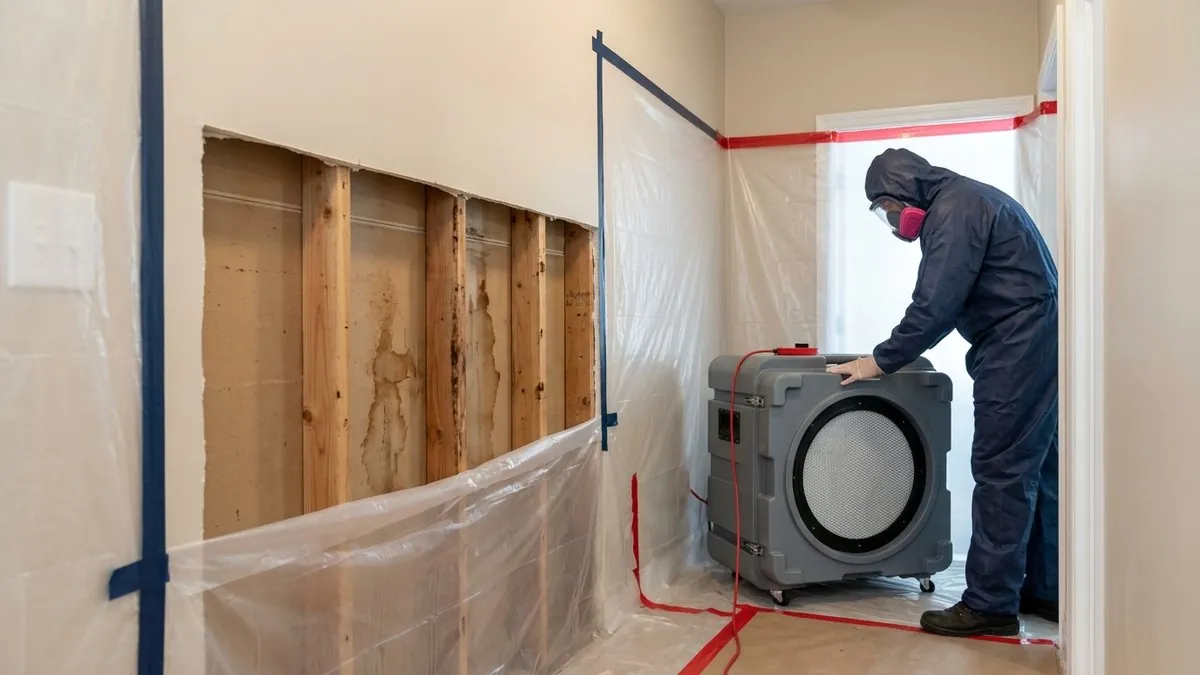
- Containment with plastic barriers and negative air machines so cleaning does not spread residue to clean rooms.
- HEPA air filtration running during work to capture airborne particles.
- Top down cleaning, starting with ceilings and upper walls and ending with floors.
- Contents cleaning or removal for items that can be saved.
- HVAC inspection and cleaning where smoke or soot entered the system.
- Final inspection for remaining residue and odor.
What cannot always be cleaned
Some materials absorb residue so deeply that replacement is more practical than cleaning. Insulation, carpet padding, unsealed porous wood and heavily affected drywall are common examples. A good company explains which items are cleaned, which are replaced and why, so your insurer can review the scope. Ask for this in writing.
Questions to ask before work starts
- How will you identify the type of soot on my surfaces?
- Which areas will be contained and filtered?
- What is your plan for the HVAC system?
- Which materials do you expect to replace and why?
- How will you confirm the cleaning worked?
Find help in your state
Popular cities
Frequently asked questions
Can I clean soot myself?
Light dry soot on a few hard surfaces can sometimes be vacuumed carefully with a HEPA vacuum. Wet cleaning, large areas, protein residue and anything near ducts or electronics should be left to professionals to avoid smearing and exposure.
Is soot harmful to breathe?
Fine smoke particles can irritate eyes, nose, throat and lungs, and people with asthma or heart conditions are more sensitive. Wear a properly fitted N95 or better respirator for any cleanup and ask a professional about air filtration.
Will soot damage spread if I wait?
Yes. Acidic residue can etch glass, tarnish metal and stain finishes, and humidity speeds the process. Earlier cleaning usually means more items can be saved.
Does insurance pay for soot removal?
Most homeowners and business policies cover smoke and soot damage from a covered fire. Check your policy and ask your insurer about documentation requirements.
Need this service now?
Call toll free to be connected with an independent local company.